
Construction Update: January 2026
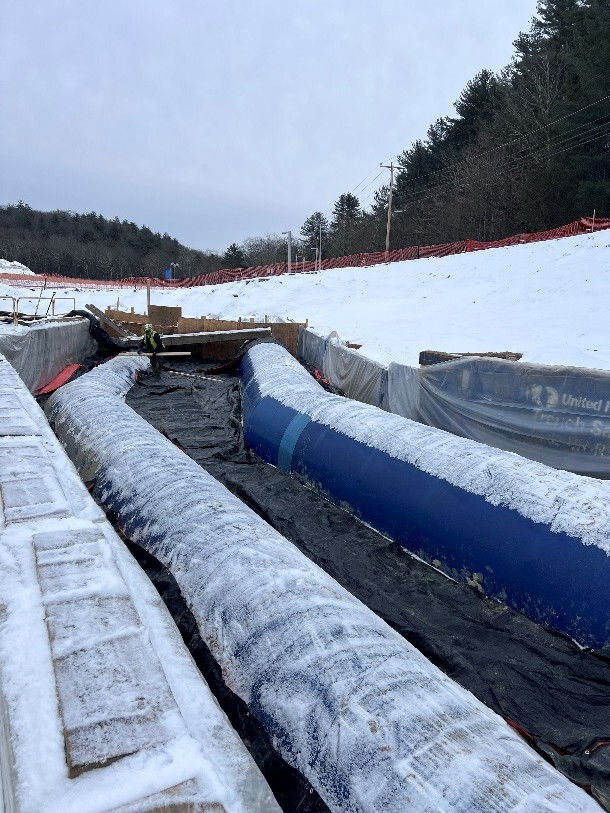
In January, we put our newly installed raw water pipelines to bed, section by section.
First, workers dug out the snow and thawed the pipes using a combination of ground thaw units and jumbo insulating blankets. Workers arranged hoses from a unit heater across the ground, circulating glycol, and then draped blankets over them. This is typical prep for concrete placements in the winter, where the surface needs to be at least 40 degrees to ensure the concrete or fill cures consistently.
Next, wires for cathodic protection were installed on the outside of the pipe to prevent rust and corrosion. They're getting covered with this fill as well.
Then, crews poured a concrete-like mixture called flowable fill over the pipeline installation. Once hardened, it stabilizes the pipes long term. This fill is low strength and meant to be excavatable, like soil.

As each section was poured and cured, crews removed the block formwork wall and moved it to the next section.
Finally, we imported backfill and carefully compacted the soil. Contractors used piece of equipment called a Troxler to measure soil compaction. Today, all of these steps are out of sight and out of mind, but they are key to protecting and stabilizing our raw water pipeline for decades to come.


