
Construction Update August 2026
Clearing the Way for the Next Phase
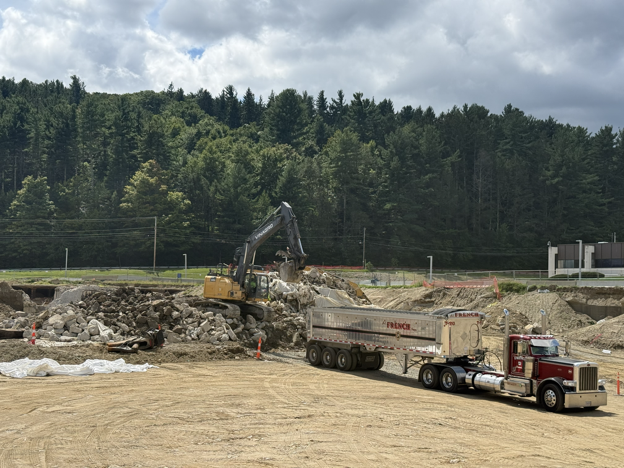
Construction crews made significant progress in August, with the most visible achievement being the removal of debris from the recently demolished Regulator House 3 on the site of the old 1925 slow sand filters. This opens up the site for upcoming underground piping installations and future foundation work.
Metal Separation and Recycling
Crews used large shears to separate metal from concrete in the debris, including the hundred-year-old riveted steel pipes. The recovered metal will be recycled, giving these historic materials a new life elsewhere.


New Stormwater Connection and Raw Water Main
Another major milestone was the connection of the new stormwater drainage system. Drainage from the site originally travelled below the 1925 slow sand filters. In order to construct the new water treatment plant, this drainage needed to be relocated. Crews installed a new manhole structure and completed critical tie-ins that were necessary before additional site work could proceed.


Work also continued on the new raw water transmission mains. Large-diameter pipes, some measuring up to six feet in diameter, were installed, welded, tested, and prepared for service. Specialized welding and vacuum testing help ensure every connection is secure before the pipeline is placed into operation.


Throughout the site, excavation and rock removal activities remained ongoing as crews prepared the ground for future construction. Despite the scale of the work, the project team continues to coordinate closely with plant operations to keep this active water treatment facility running safely and reliably during construction.
With debris removal nearing completion and underground infrastructure taking shape, the project is well positioned to transition into its next phase in the coming weeks, which includes more pipe installation on the site.


