June Construction Update
Old Infrastructure Comes Down as New Systems Take Shape
With major demolition advancing and new infrastructure steadily taking shape, June offered one of the clearest views yet of the plant's early transition from a 100-year-old facility to a modern treatment system. As overheard by one worker on site, "You can really feel the progress around here now.”
Sand Filter Demolition Reaches Major Milestones
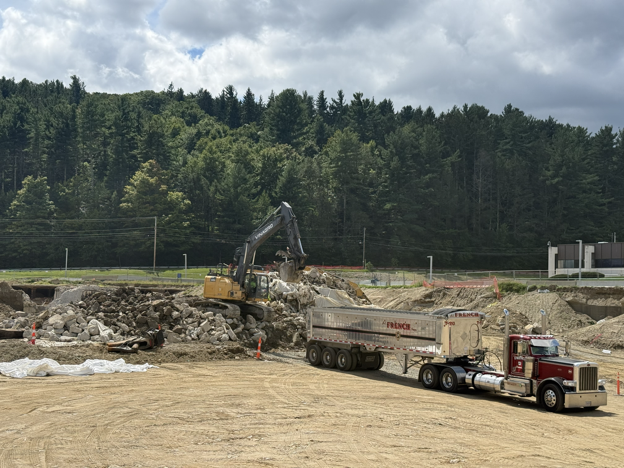
Demolition activity accelerated throughout June. Most of Filters 9 and 10 were demolished, and work also advanced on demolishing Filters 7 and 8. These filters date from 1925.


Crews continue to remove concrete, sand, and metal materials in carefully separated streams. Concrete debris is hauled off-site for future crushing and reuse, while metal components are transported for recycling.
As demolition progresses, crews continue removing not only thousands of cubic yards of sand that had filtered our water for decades, but also access structures and support features. All of this must be cleared from the site to make way for the new plant.

Concrete Pumping, Pouring, and Placing
At the same time, construction of major components of the new plant continues. Crews spent much of June installing rebar, building forms, and placing concrete to encase new 60-inch and 72-inch water mains that will carry raw water across the campus to the new WTP. Large concrete pump trucks and specialized crews worked through a series of carefully coordinated concrete pours, with quality-control testing performed on every batch to ensure the new infrastructure meets long-term performance standards.


A bend in the new water main alignment was completed. Pipe sections that had been installed earlier this spring were fully welded and prepared for backfilling, marking significant progress in establishing the backbone of the future treatment system.

The Precision Behind the Progress
Behind every visible change is planning and precision. Survey crews use GPS-based positioning systems to ensure new infrastructure is installed where designers intended, while contractors coordinate the moving parts of demolition, excavation, concrete placement, material recycling, and environmental controls across the active construction site.